
Ablative and Nonablative Lasers
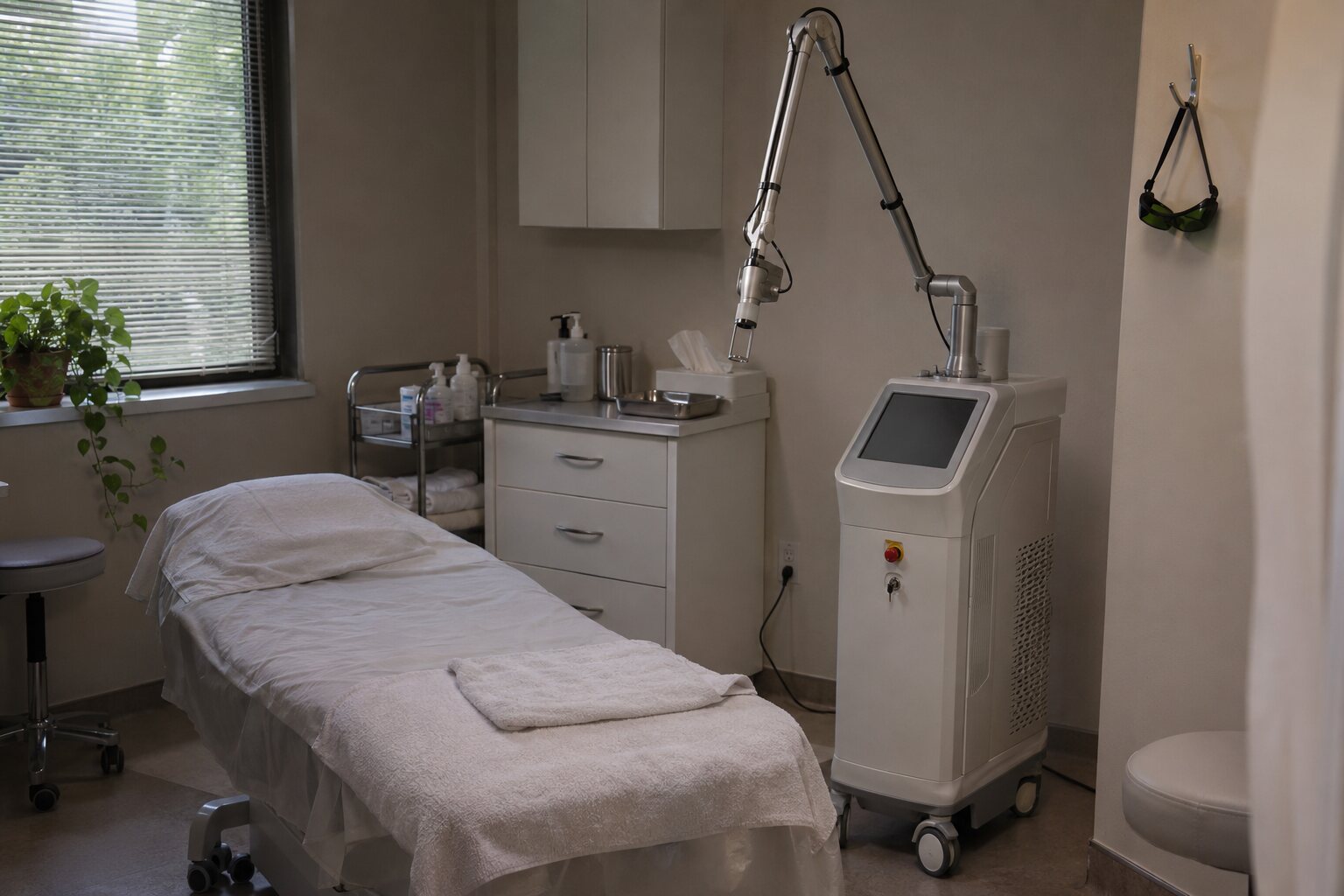
Laser resurfacing guides sort lasers into ablative and nonablative types. A reader in Westchester with an event on the calendar, or a limited window to heal, wants the differences that affect planning. This page compares what Cleveland Clinic publishes about recovery for two laser types.
When the calendar drives the laser choice
Most guides start with the technology. Your situation may start with a date. If a wedding, a work trip or a family visit is fixed, recovery time becomes the first question and everything else follows.
A review of topical treatments and skin-resurfacing techniques for skin ageing gives wider background on where lasers sit among resurfacing options.
What Cleveland Clinic says about recovery
Cleveland Clinic gives recovery times for two laser types. Recovery time with CO2 laser resurfacing is up to two weeks. Recovery time with erbium laser resurfacing is one full week.
Set side by side, the CO2 figure can run longer: up to two weeks, against one full week for erbium. For a reader with a fixed date, that difference is the point of the comparison.
Where those numbers strain
The numbers cover the two lasers named and nothing else. They do not describe your own schedule or your own skin.
For broader reading, a physician-directed overview of lasers, chemical peels and other noninvasive modalities places lasers next to the other options on the table, including chemical peels.
What to raise with a clinician
Tell the clinician your date first. Then the choice between laser types can start from your time limit instead of ending at it. Ask which type they would consider for you, and what recovery they would plan around.