
Laser Skin Resurfacing Basics
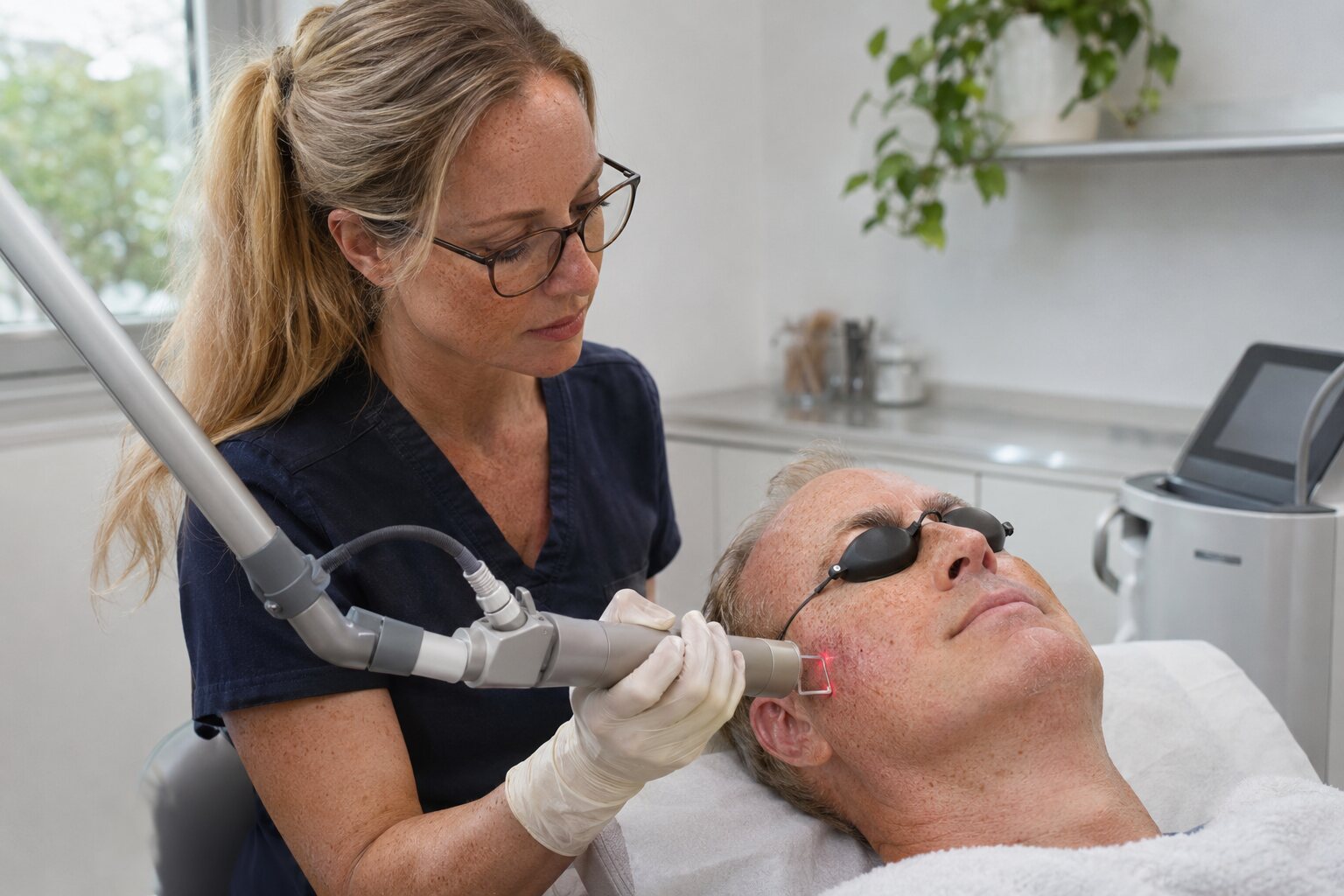
Laser skin resurfacing is easy to describe in a sentence and hard to fit to a real case. A reader in Westchester whose skin, schedule or history is not standard needs the basics first and the caveats right after.
Why basics do not settle a complicated case
Basics describe the procedure in general. Your situation includes your skin, your schedule and what you hope to change.
For wider context on where lasers fit among resurfacing methods, see a review of topical treatments and skin-resurfacing techniques for skin ageing.
What Cleveland Clinic says laser resurfacing does
Cleveland Clinic describes the goals and the method. Laser skin resurfacing reduces wrinkles and scars, evens out skin coloring, tightens skin and removes lesions. Laser skin resurfacing removes skin very precisely, layer-by-layer by vaporizing it.
The first sentence lists outcomes. The second describes the mechanism. Read together, they show why the treatment is a serious step and not a casual one.
Reading wider than one source
A single clinic page cannot cover every option. A physician-directed overview of lasers, chemical peels and other noninvasive modalities puts lasers beside chemical peels and other choices.
Where the basic description strains
The description above is of a technique. It is not a description of you. Your own skin history and your timing do not appear in it.
The trade-off is between a general summary that is easy to read and a personal plan that takes a consultation to build.
Questions to raise with a clinician
Ask what the treatment would be aimed at in your case and what recovery to plan for. If skin of color is part of your situation, a review of energy-based devices for facial skin conditions in skin of color is relevant reading to bring along.